Showing posts with label Jerry Bridges. Show all posts

Friday, January 31, 2020

Angrrrrrrrrrrr

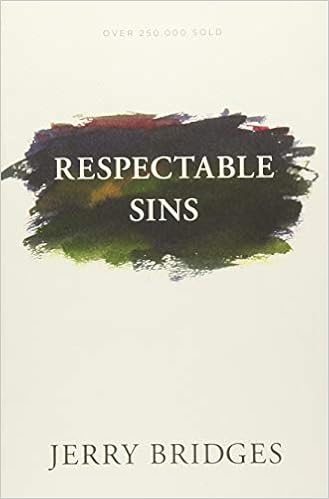
I have currently stopped reading the book, Respectable Sins by Jerry Bridges. Here's why:


As I read this book, he keeps calling the emotions sin. Anger is sin, discontentment is sin, anxiety is sin, and so on. But to me, it is not the emotion that is sin, but the way that we respond to it.

Sometimes, God is portrayed as angry. Is He sinning? No, for God does not sin. Does that mean that different rules apply to Him? No.

I don't want to feel guilty for experiencing God-given emotions. But that is the result if I keep hearing that the sin is the emotion. Can we stop from being angry? If we see someone murdered or abused, should we not feel anger? If someone sneaks up on us, should we not feel anxiety or fear?

So at this point, my choice is to stop, even though this book has made some excellent points and I have learned from it. Maybe it is something I will come back to later.


Thursday, January 30, 2020

Impatience and Irritability

I am currently reading the book, Respectable Sins by Jerry Bridges.


Chapter 14 - Impatience and Irritability

        • Frequently displayed more within the family dynamic than without. 
        • If patience is a virtue, impatience is sin.
        • Irritability = frequent impatience.
        • Two options are given for dealing with an irritable person.
          • Follow the example of Jesus
          • Confrontation, but done for their benefit, not just yours
Not sure that I see impatience as sin. I think it is more about how we deal eith feelings of impatience. But I can say that for several other issues in the book as well. It is a fine line.

Wednesday, January 29, 2020

Self Control

I am currently reading the book, Respectable Sins by Jerry Bridges.

Chapter 13 - Self Control

What role does self control play in the life of the Christian? Aren't we supposed to let God be in control of all things? I that is completely true, then why is self-control on of the fruit of the Spirit? (Galatians 5:23) Why is Titus told to tech self control? (Titus 2:2,5,6)

But I thought that God would free me from temptations and take my sinful urges from me. But that has not completely worked yet, at least for me. I think of my experience with AA and the 12 steps. While working in ministry I was invited to attend some meetings and exposed to their program. One of their sayings in reference to the programs goes something like this, "Keep working it (the steps, the program), it works if you work it." I have talked to folks involved in the program. Some will say that the desire to drink has passed from them. Others still struggle. Same with some Christians. I recall talking to one man who was sharing that he used to have a foul mouth, but one day God took that from him. No more desire to curse. Does that mean he lived a sin-free life from that point? No. God does play a part. But we do too. And for those sins that God does not remove from us, we must exercise some level of self control. I believe it is called sanctification.

This self-control is dependent on the influence and enablement of the Holy Spirit. It requires continual exposure of our mind to the words of God and continual prayer for the Holy Spirit to give us both the desire and power to exercise self-control. We might say that self-control is not control by oneself through one’s own willpower but rather control of oneself through the power of the Holy Spirit.  Bridges, Jerry. Respectable Sins (p. 107). NavPress. Kindle Edition. 

So our struggles are not without purpose. It would seem that they are there to ground us in our faith, and it in our dependence on God, His Spirit, and His word. 

Monday, January 27, 2020

Pride

I am currently reading the book, Respectable Sins by Jerry Bridges.


Chapter 11, Pride

One of the problems with pride is that we can see it in others but not in ourselves.


Bridges, Jerry. Respectable Sins (p. 85). NavPress. Kindle Edition. 

Some ideas from the chapter:

          • Seek an attitude of humility
          • Set your heart to study the law of the Lord
          • Hold your convictions (doctrinal beliefs) with humility
          • Do not boast in possessions or abilities, for God is ultimately in control
          • Remain teachable and submissive to Biblical authority

Friday, January 24, 2020

Thanks or No Thanks?

I am currently reading the book, Respectable Sins by Jerry Bridges.

This chapter (10) deals with unthankfulness.

He begins the chapter referencing the time Jesus healed ten lepers, and only one (a Samaritan at that!), returned to give thanks.

How could that be? Did they not recognize the healing they had just been given? How could you be a leper one moment, healed the next, and not be thankful? Maybe they were. Maybe it happened later. Maybe they just didn't go back to thank Jesus. Maybe they were afraid of the consequence of thanking him (from the religious leaders), lots of maybes I will never know.

This chapter to me, speaks to one of the key elements stressed in Reformed Theology that I missed before, and that is the idea that it is not what we have to offer God that matters, it is what he has given us. I cannot live a life good enough to earn God's favor or salvation, but I can be thankful of what He has done.

Is not giving thanks a sin? I think it is more than that. I think not being thankful brings our very salvation into question. Not being thankful has an air of arrogance, pride, as if what we have been given is expected from God, the least He can do. Like with the Pharisee and the tax-collector. But we know it was the tax-collector who walked away justified.

Thursday, January 23, 2020

Discontentment

I am currently reading the book, Respectable Sins by Jerry Bridges.


This chapter (9) deals with discontentment. 

I find it interesting that he feels there is a place for discontentment in the life of the Christian, but not fear or anxiety. Yet all of these are God given emotions or reactions to situations that God has placed in our lives.

I agree that discontentment can lead to sin, but I struggle with the idea that discontentment in itself is sin. Discontentment should lead to a critical evaluation of our situation. Wallowing in discontentment is not a good or appropriate response. 

I think that sometimes we think that God wants us to blindly accept whatever He lays before us with a smile painted on our faces. I disagree. I think God is okay with our questions. I think He enjoys it when we lay our burdens before Him. Not in a sadistic way, but because He loves us and wants us to interact honestly with Him. The author mentions Job. Job was a man who had it all and lost it all. What a short book it would be if Job had just painted on a smile and accepted it. But Job struggled, even argued with God. And Job grew through that process. 

Wednesday, January 22, 2020

Anxiety and Frustration

I am currently reading the book, Respectable Sins by Jerry Bridges.

Not sure I agree with the labeling of anxiety and frustration as sin, but maybe that is due to a lack of understanding on my part. (Chapter 8)

I feel anxiety, frustration, fear, happiness, sadness, and many other emotions at times. I don't believe I am in control of the initial feelings, but what I am in control of is the response to those feelings. " Be angry and do not sin; do not let the sun go down on your anger." (Eph. 4:26 ESV) It is not anger that is sin, but how I handle it. Emotions, in my opinion, are a gift from God. Does not fear protect us? Is not the beginning of wisdom fear? I believe it is good for us to recognize and identify our feelings, and to not let our emotions get the best of us. 

Bridges asks toward the end of the chapter, Can you picture Jesus ever being anxious or frustrated? My answer is yes, I think so. What about in the temple with the selling of animals for sacrifice? What about in the garden when he was in agony and his sweat became like great drops of blood falling down on the ground? I believe that the sin is not in the emotion itself, but rather can be found in inappropriate reaction to those emotions. I think we would both agree that our response to feelings and emotions always needs to focus on God rather than ourselves.

Tuesday, January 21, 2020

Right verses Righteous

I am currently reading the book, Respectable Sins by Jerry Bridges.

Thoughts after reading Chapter 7

Is it possible to do right, yet be unrighteous? I believe it is. There are many people who do not believe in Jesus who are what the world would call "good people." But just being good without recognizing our dependence on God is not righteousness, it is just doing right. Jesus did not die so that we would do right. In fact, one might say that to do right without depending on God is actually ungodliness.

We are not only to eat to the glory of God, we are to drive to the glory of God, we are to shop to the glory of God, and we are to engage in our social relationships to the glory of God. Everything we do is to be done to the glory of God. That is the mark of a godly person.
Bridges, Jerry. Respectable Sins (p. 51). NavPress. Kindle Edition. 

I think of the parable of the wise and foolish builders. Two buildings (lives?) that looked the same (good deeds?) But one had no foundation, so it eventually crumbled. The other, with the rock for its foundation (godliness?) survived. 

So then, righteousness is the overflow of a heart that is focused on God. Perfect righteousness? Don't fool yourself. But righteousness none the less. And a righteousness that is focused on God will be a righteousness that will grow (sanctification). 


Sunday, January 19, 2020

Context of the Gospel

Back again. Took a hiatus while I recovered from a couple of surgeries (knee and hip replaced).

Back to Respectable Sins by Jerry Bridges.


The first direction is that we should always address our sin in the context of the gospel.
Bridges, Jerry. Respectable Sins (p. 41). NavPress. Kindle Edition. 

Okay, so let's talk about what the gospel is for a moment, because although this word is often used, I think it has different meanings to different people. To some it is a formula. 5 steps, Romans Road, etc. It is something we do or a plan we follow to accomplish the goal of heaven. Not to me.

The gospel is the good news that Jesus has paid the full price for my disobedience. If I understand that, and if I repent (another word that is often used, and perhaps has many different meanings as well), my debt is paid. Repentance being that the good news of the gospel penetrates my heart, and I begin to live with a new focus in my life, surrendering the "me" and loving and living for Him.

So, the context of the gospel is not about stopping sinning, as if that is just another step in the process. It is about the reason behind the stopping. The context of the gospel is that my debt has been paid, and I now life for Christ. So I address my sin because of what Christ has done, and not focused on the sin as a obstacle to be overcome.

Monday, September 23, 2019

This one could raise some eyebrows

I am currently reading the book, Respectable Sins by Jerry Bridges.

It is quite possible that though He is grieved by our sin (see Ephesians 4:30), He may even use that sin to humble us and to exercise us to cry out to Him with a sense of greater dependency.

Bridges, Jerry. Respectable Sins (p. 38). NavPress. Kindle Edition.

Note: The path I am taking today may not be what the author had in mind with this quote.

What role does God play in sin (I will use the word evil, which may or may not have the same thought)? Before you jump on high horse, let's think about some things...

  • If God is the creator of all things, did he create evil (sin), or does it just exist as the opposite of good?
  • Can we even have or define good without the existence of evil?
  • What control does God exhibit in the amount of evil in creation? 
  • What is the difference between God causing something evil to happen and God allowing something evil to happen?
  • Why would God use sin to bring us closer to him?
Now I will share some thoughts, feel free to disagree.
  • If God is the creator of all things, did he create evil (sin), or does it just exist as the opposite of good?
    • This is one I could go either way on. Good and evil are words that we use because we need to define things in a specific and understandable way. But who is to say that the true definitions of good and evil are not way beyond our ability to comprehend. 
    • Speaking linguistically, aren't good and evil verbs? Verbs we use to label an action. "That was an evil deed." So the deed was labeled evil, most likely because of the context, but the deed itself in not created evil. We label cancer as an evil deed, but is the creation of cancerous cells evil without the context?
    • Evil can be a noun when we speak of it as a thing. "There is too much evil in the world." But in this case, that determination becomes subjective, because often by evil we mean things that we don't like. To some, abortion is a terrible evil, to others it is not an evil at all, just a choice. So once again, the evil is defined by the item or items it is associated with.
    • When looking at this in regard to sin, the same argument holds. The action itself may or not be sin depending on the context. Killing is a sin if you kill your neighbor to rob him. But killing in a war would not be considered sin by many.
  • Can we even have or define good without the existence of evil?
    • Define cold. It is the absence of heat. If you do not understand heat, can you really understand cold? I think of good and evil the same way. Without evil, can we understand goodness? Can we appreciate light without darkness? To what extent must we experience darkness to understand light? How do you quantify darkness without light?
  • What control does God exhibit in the amount of evil in creation? 
    • If God is sovereign, then He is in control of everything. But does He allow some things to happen without His say so? Again, tough question. We do see God in the Bible telling David that his son would die because of his sin. Some would call that evil. But God cannot do evil, so either our understanding of evil is off, or our understand of God is. I say the former. 
  • What is the difference between God causing something evil to happen and God allowing something evil to happen?
    • Again, we first have to define evil. Were the 12 plagues evil? God caused them. But He did so to bring about a purpose. Cancer, injury, death, poverty, what exactly is God's role and does this alter my responsibility? More questions, no answers.
  • Why would God use sin to bring us closer to him?
    • Because God is in control of all things. Maybe, just like standing outside of time, God stands outside of good and evil as the one in control, causing things to happen according to His will. When God puts something into action, it is His purpose that defines the goodness or evilness of that action. Like when a parent disciplines a child. Yelling at a child with no context would be considered evil, but yelling at a child who was about to tough a hot stove should not be thought of the same way. We cannot often, if ever, see the big picture of what God might be doing.
Okay, random thoughts today, but something I think many struggle with at times. My brother once said he could not worship a god who allows children to starve. I once heard a preacher say that God does not kill children, and he could not worship a god who did. I think we need to be careful of the way that we view God!

Thursday, August 29, 2019

Perspective

I am currently reading the book, Respectable Sins by Jerry Bridges.

This statement can be found in the first paragraph of Chapter 5. "God does not forgive because He wants to be lenient with us. He forgives because His justice has been satisfied." (Bridges, Jerry. Respectable Sins (p. 33). NavPress. Kindle Edition.) 

I believe this is a huge distinction that needs to be made. I believe it was in reading one of Francis Chan's books that I came across the statement along the lines of this, Many Christians have been told that God created us because He was lonely. But how can the creator of the universe, who is totally sufficient in his own glory, be lonely? Or as I remember Matt Chandler putting it, "So His solution was to create a bunch of glory thieving rats to satisfy His loneliness?" God does not want to be lenient. In fact, the price that it cost Him shows this. No, but the debt has been paid. His justice has been satisfied.

This is important because it creates a perspective on who God is. In one case, he is a friend, buddy, pal, who has a weakness for human companionship. The word co-dependent comes to mind. So much for His holiness, majesty, etc., He is really just one of us. A god, but not the God of the universe. In the other case, He retains everything the Bible says about Him. His is holy, just, God above all, and yet can still be loving and merciful.

If God wants to be lenient with us, then He is the parent who spoils their child, you know, the one who grows up to be a total brat. But if He forgives because His justice has been satisfied, that is a completely different take. That is more like the parent who says, "This is going to hurt me more than it will hurt you." That is the parent who suffers with the child, not for the child. 

So what kind of a God do we serve? One who is just like us, or one who is the almighty creator and ruler of the universe?

Friday, August 23, 2019

What kind of God is this?

I am currently reading the book, Respectable Sins by Jerry Bridges.


God is not watching me from His heavenly throne saying, “When are you going to get your act together? When are you going to deal with that sin?” Rather, He is, as it were, coming alongside me, saying, “We are going to work on that sin, but meanwhile I want you to know that I no longer count it against you.” (Bridges, Jerry. Respectable Sins (p. 28). NavPress. Kindle Edition.) 

Unfortunately, I do not think the picture of a God who comes along side me is one that is preached in many churches today.

In many churches, we see the first God, the God who is watching you, waiting for you to fix yourself. The God of the prosperity preachers, who tell you that you need to have a better self-worth to live your best life. The God of the Pharisee who thanked God that he was not like the tax-collector sinner who stood a ways off from him.

Let me clarify, I am not, nor do I believe is Bridges in his book, saying that God is okay with our sin. In fact, quite the opposite. It's just that the means of dealing with that sin are two polar opposites.

In the first case, it is all on us. God is watching while we must fix it. That is a huge burden, an unbearable one as I constantly fall and must pick myself up again and again. Yet Jesus said, "Take my yoke upon you, and learn from me, for I am gentle and lowly in heart, and you will find rest for your souls. For my yoke is easy, and my burden is light.”  (Matt 11:29-30) 

In the second, it is a joint effort. God and me. The elephant and mouse on the bridge. You know, so that when they got to the other side, the mouse looked up at the elephant and said, "Boy, we sure shook that bridge, didn't we." We are yoked together with Jesus, just as two oxen (or an elephant and a mouse) are put together to plow a field. We are a work in progress and God leads us as we stay yoked to Him and follow His leading. As we pray, as we study His word, as we surrender to His Spirit. As we live in the joy that exists because of the assurance of salvation. John Piper calls it "Christian Hedonism." Where hedonism is the pursuit of ecstasy for pleasures sake, I understand Christian Hedonism as the pursuit of the ecstasy that is found in God alone. The more I find that my joy in God, the lighter my burden becomes, because now when I choose not to follow the ways of the world to satisfy my longings, but rather the ways of God, the burden is light because it is what my heart truly desires. It is why David could say that his delight is in the law of the Lord. (Ps 1:1-2, 40:8, 119:69-72, 119:92-93, 119:174)

I will end today with this quote from the book, "This twofold effect of encouragement and gratitude together produce in us a desire to deal with our sin. Make no mistake: Dealing with our sin is not an option. We are commanded to put sin to death. It is our duty to do so. But duty without desire soon produces drudgery. And it is the truth of the gospel, reaffirmed in our hearts daily, that puts desire into our duty." (Bridges, Jerry. Respectable Sins (p. 28). NavPress. Kindle Edition.)

Wednesday, August 21, 2019

The cure for sin

I am currently reading the book, Respectable Sins by Jerry Bridges.


In chapter 3, Bridges talks about the destructive power of sin, and makes an analogy using cancer, something that has deeply affected his life. Chapter 4 is titles "The Remedy for Sin." If you think of sin as cancer, hearing that there is a remedy is surely a welcome relief. 

He speaks of John Newton, author of the well-known hymn, "Amazing Grace." Early in life, Newton was a slave trader. Eventually becoming a minister, Newton looks back to his life as a slave trader and of course, is horrified by it. Reminds me of the story of the Apostle Paul in some ways. 

Bridges writes, "Both John Newton and the apostle Paul saw themselves as great sinners, but with a great Savior." (Bridges, Jerry. Respectable Sins (pp. 23-24). NavPress. Kindle Edition.) While we might not have committed the same sins, any sin is enough to separate us from God, and with that knowledge, I pray that we too might see ourselves as great sinners in need of a Savior. Or as sick patients in need of a remedy.

I think we can safely make the assumption that both Newton and Paul progressed in their growth in the faith as time went on. One thing about this growth, it increased their knowledge of their sinfulness! Sadly, I am not sure that many of today's Christians or preaching shares this position. 

So what is the remedy for sin? It is the gospel. Not the one-time confession of faith or acceptance of Christ, but the daily knowledge that Christ died on the cross in our place. He suffered damnation in our place. And if there is a day that we do not recognize this, that is a day that we need to repent of. The Bible confirms this repeatedly. If not, then why all of the instruction about how Christians should live? Why would Paul have to encourage us to live as "living sacrifices" (Romans 12:1) or to "live a life worthy of the gospel" (Phil 1:27) unless there was an ongoing need to do so in the life of the believer?

It all brings me back to something God laid on my heart several years ago. Something obvious, but also something that had not fully penetrated by heart. Something that I still let go of when I do not remind myself of the gospel each and every day. And that is simply how beautiful God is. Why else would I become a living sacrifice to Him? Because I have seen His mercy. Because I have seen my sin, what it does to me, and believe that God through Jesus Christ has provided the remedy.

To quote Paul from Romans 11:33-36, just prior to his statement in Romans 12:1:

Oh, the depth of the riches and wisdom and knowledge of God! How unsearchable are his judgments and how inscrutable his ways!
“For who has known the mind of the Lord,
or who has been his counselor?”
“Or who has given a gift to him
that he might be repaid?”
For from him and through him and to him are all things. To him be glory forever. Amen.


Monday, August 19, 2019

Seeing the good in light of the bad

I am currently reading the book, Respectable Sins by Jerry Bridges.


I am picking up with the beginning of Chapter 3. In this chapter Bridges begins by discussing the destructive power of sin. Not only does sin destroy our union with God, but it also has destructive effects in other areas of our lives as well. And this is not just something that the unsaved must deal with, the Christian must deal with it as well.

Bridges states, "Now, here is the unvarnished truth that we need to lay to heart. Even though our hearts have been renewed, even though we have been freed from the absolute dominion of sin, even though God’s Holy Spirit dwells within our bodies, this principle of sin still lurks within us and wages war against our souls. It is the failure to recognize the awful reality of this truth that provides the fertile soil in which our “respectable” or “acceptable” sins grow and flourish." (Bridges, Jerry. Respectable Sins (p. 16). NavPress. Kindle Edition.) 

In this chapter Bridges compares sin to cancer, something that he has personally felt the impact of in his own life. He shares how his wife was diagnosed with and then died of the disease. Sin, like cancer, is bad news. But that is part of the point of the gospel. If we don't see the bad news, how can we embrace the good news? But if we see the bad news as bad as it is, then the good news looks glorious! 

I will end with this quote from Chapter 3, "God forgives our sin because of the shed blood of Christ, but He does not tolerate it. Instead, every sin that we commit, even the subtle sin that we don’t even think about, was laid upon Christ as He bore the curse of God in our place." (Bridges, Jerry. Respectable Sins (p. 22). NavPress. Kindle Edition.) When we begin to understand the meaning of that, the meaning of grace, the depth of our sin, then we can begin to appreciate the meaning of the gospel message.


Friday, August 16, 2019

Shhh...that might offend someone.

I am currently reading the book, Respectable Sins by Jerry Bridges.


In chapter 2, he sets the premise that sin is not something that is discussed anymore by the average church goer, and perhaps something that is not even a issue for them. 

But why? He gives this premise in the book, "It may have been softened in many of our churches so as not to make the audiences uncomfortable." (Bridges, Jerry. Respectable Sins (p. 12). NavPress. Kindle Edition.) I couldn't agree more. As one who has sat in on numerous committee meetings, the common theme is, "What can we do to make our church more attractive to others?" Bigger buildings, gyms, coffee bars, that what we need. What can we get rid of? Fire and brimstone, boring hymns, and lets stop mentioning sin. But there is an axiom I have often heard, "You win people to what you win them with." I doubt many Christians today could even articulate what the gospel truly is.

Of course, I think that some of the judgmental finger-pointing of some churches and Christians contributes to this idea. Picketing or even bombing abortion clinics is just one example that comes to mind. We want to show that we are accepting, although at times even that has it limits. Again, I believe that we tend to be more tolerant of this sins we might be guilty of, or the "Respectable Sins," than of those that would offend us.

The author states that this is a dark picture. I agree. Jesus said, "Nevertheless, when the Son of Man comes, will he find faith on earth?" Luke (18:8b). My fear is that there are many in the church who are there for the wrong reasons, because they have been won through the wrong methods. If we don't believe in our own sinfulness, do we really have the faith that saves us?

“Not everyone who says to me, ‘Lord, Lord,’ will enter the kingdom of heaven, but the one who does the will of my Father who is in heaven. On that day many will say to me, ‘Lord, Lord, did we not prophesy in your name, and cast out demons in your name, and do many mighty works in your name?’ And then will I declare to them, ‘I never knew you; depart from me, you workers of lawlessness.’ (Matthew 7:21-23)


Saturday, August 10, 2019

What about sin?

I am currently reading the book, Respectable Sins by Jerry Bridges.


In chapter 2, Bridges discusses sin. Specifically, how the idea of sin seems to be disappearing from our culture. And not just our culture, but our churches as well. If and when we do address sin, it is the "big" sins, such as murder or abortion, etc. (basically the sins of others) He makes this statement in the chapter, "But on the whole, we appear to be more concerned about the sins of society than we are the sins of the saints." (Bridges, Jerry. Respectable Sins (pp. 9-10). NavPress. Kindle Edition.)

 Think about it. When is the last time you heard someone condemn one of the big sins? Now think about when is that last time you heard someone condemn gossip, anger, white lies, etc.? 

Which of these sins make us guilty of being sinners? Answer: all of them. 

He brings the point home to me when he says, "that means a 99 on a final exam is a failing grade." 
(Bridges, Jerry. Respectable Sins (p. 12). NavPress. Kindle Edition.) It means that anything less that perfection is imperfection. 

But it is this fact that makes the gospel so beautiful. Remember, ALL have sinned and fall short of the glory of God (Romans 3:23), and are justified by his grace as a gift, through the redemption that is in Christ Jesus. (Romans 3:24) So here is my conclusion: As we fail to see our sin (and ourselves as sinners), we fail to see the beauty of the gospel. As we fail to see the beauty of the gospel, we rob ourselves of our ability to appropriately respond to it. This is not the self-help gospel of many today, it is the God-help-me gospel of the Bible. 

Yet as we do the opposite, that is focus on the sins of others, it makes the gospel into something it was never meant to be, it makes it into legalism. It makes it into something that is ugly, challenging to do, hard work. But Jesus said that his burden is easy. 

God, be merciful to me, a sinner! (Luke 18:13b) Which man went away justified?


Friday, August 9, 2019

Mirror, Mirror, on the wall...

I am currently reading the book, Respectable Sins by Jerry Bridges.

I want to recap yesterday with this illustration. Bridges was talking about the word "saint" and its usage in the New Testament. The word saint is not about what we do (as might be the modern interpretation), but it is who we are. And we are the redeemed. So our actions are determined by who we are.

If you say the word saint in New Orleans, many people would think you are talking about a football player, as New Orleans is the home of the NFL team by that name. Their quarterback currently is Drew Brees. So by New Orleans standards, Drew Brees is a saint. And this is not based on his actions. If he throws a touchdown pass, he is a saint. If he throws an interception, he is a saint. The town does not disown him if he fails. If he retires, he will continue to be regarded as a saint.

So when Paul addresses fellow believers, he refers to them as saints. This is based on their status and not their behavior. In addressing the believers in Corinth, there were some issues, but these issues did not keep Paul from referring to them as saints. The idea being set forth is we too, need to think of ourselves as saints. But many who profess Christianity don't. Nor do many think of themselves as sinners.

A recent example of this can be seen on the TV reality show, the Bachelorette. Apparently, there is a woman on the show who professes to be a Christian. Yet this woman admits to having sex with contestants on the show. When confronted by another contestant, also a professing Christian, about this behavior, she sent him packing. According to this article, she stated,  “I have had sex and, like, Jesus still loves me.” The article also quotes her as saying, “Guess what? Sex might be a sin out of marriage, pride is a sin, too, and I feel like this is like a pride thing,” Brown said. “I feel like I’ve finally gotten clarity on you and I do not want you to be my husband.”

Is she a saint? That is up to God. Does she see herself as a saint? Does she herself as a sinner? It appears that the answer to both of those questions is no.

How do you see yourself? How do I see myself?


Thursday, August 8, 2019

Putting on the other shoe

I am currently reading the book, Respectable Sins by Jerry Bridges.

In yesterday's post, I hit on the idea that the gospel is not a message about "if you just ask Jesus into your heart, you can go to heaven."  But the other shoe in that pair must also be addressed. The gospel is also more than "do better, try harder, and maybe when God weighs your deeds at the eternal roll-call, you fill have enough goodness to make it through.

Bridges begins chapter 1 by talking about the word, "saints." I think when most of us hear this word, we think of someone who, by virtue of multiple noble actions, has achieved a status beyond the normal person, sometimes referred to as a godly person. The Catholic church gives the title to those who have done just that. But in 1 Corinthians, Paul addresses the Corinthians as saints. Now if you get to reading the text, you can clearly see that these people were not more noble than most. In fact, they had quite a few flaws within their character. Bridges states, The answer lies in the meaning of the word as it is used in the Bible. The Greek word for saint is hagios, and it refers not to one’s character but to a state of being. Its literal meaning is “one who is separated unto God.” (Bridges, Jerry. Respectable Sins (p. 2). NavPress. Kindle Edition.) So in Biblical usage, a saint is not defined by a person's character or behavior, but rather by their status as someone whom Christ has brought into a saved relationship.

This has huge implications for us, especially within the current American theology of what makes a Christian. Biblically, a saint is defined by belonging to Christ, and not exemplary behavior. It's not that our behavior is unimportant, and Paul' admonitions throughout the New Testament confirm this, but it is that our ability to conform to those behaviors does not determine our status when it comes to being in Christ. That is why messages that only deal with our behavior will never truly represent the gospel. Messages that only promote positive thinking, messages that do not take into consideration our sinful state, messages that tell us how to have our best life now, these types of messages take away from the gospel by drawing people into believing they have heard the gospel.

How then will they call on him in whom they have not believed? And how are they to believe in him of whom they have never heard? And how are they to hear without someone preaching? And how are they to preach unless they are sent? As it is written, “How beautiful are the feet of those who preach the good news!” (Romans 10:14-15)

When it comes to gospel living, we must recognize who we are before we decide how we will act. Do you give generously? So do others who do not believe. Do you honor your wife, tell the truth (most of the time), have not murdered, don't get drunk, don't worship idols, etc.? So have others who do not believe. So what makes the difference? It is who we are. We are saints, we are sinners saved by grace, we are believers who look at God and see Him as beautiful because of His mercy and grace. And we respond accordingly. Not perfectly, but accordingly. Bridges uses the military analogy of officers in the army. As officers, a certain level of behavior is expected. Perhaps you have heard the expression, "Conduct unbecoming an officer." So their rank defines them, and the behavior follows. Soldiers who also act in manner similar to that of an officer do not become officers by their behavior. Rank defines them. And us. We are saints first, and should act accordingly.


Wednesday, August 7, 2019

The Gospel is for Sinners

I am currently reading the book, Respectable Sins by Jerry Bridges.

One of the beliefs of Calvinism, to the best of my understanding, is that of Limited Atonement. This is the belief that Christ died only for the elect, or those God predestined for salvation. Others would argue that Christ died for all. Without getting into a lot of theological debate, I say it does not matter as the end result is the same. Christ's death is only effective for those who are saved.

In the preface to the book, Bridges states, "The gospel, though, is only for sinners, for those who recognize their need of it." (Bridges, Jerry. Respectable Sins . NavPress. Kindle Edition.) Again, we could argue that the gospel is for all, but the end result is that the gospel only saves those who accept it. So in that regard, I agree with Mr. Bridges. 

So what does this mean? To me, a lot. My understanding of the gospel is it is the good news that Jesus died on the cross to take my place. For that to really have to impact me, I need to understand that not only do I deserve death for my sins, perhaps even a death as gruesome and painful as that of Christ on the cross, but I also deserve the other punishment he took, and that is God turning his back on me, eternal damnation. If you haven't thought about that lately, let that sink in.

I think much of what is preached and responded to today is not the gospel, but the idea that if we accept Jesus we get to go to heaven. The problem with this line of thinking is that it avoids the cross, it avoids our sin, it does not lead to a full appreciation of what Christ did for us on the cross, and therefore does not lead to true repentance. It is a false gospel, or not really the gospel at all. 

Do I see myself as a sinner? As one who needs salvation? Am I relying on Christ and what He has done, or am I trying to fix myself? (See this post) Is my life a response to the mercy of God (Romans 12:1), or is my life a continual striving to get things right. Or even worse, do I not strive at all anymore because God has granted me salvation because I accepted a false gospel?

Bridges describes what I believe is a logical consequence of seeing ourselves as wanting to get into heaven, but NOT seeing ourselves as sinners. "Once we trust in Christ, so the thinking goes, we no longer need the gospel." (Bridges, Jerry. Respectable Sins . NavPress. Kindle Edition.) If I believe that once I have accepted Christ I am safe, then the gospel can be put on the shelf. But if, as Bridges also states, "the gospel is a vital gift from God not only for our salvation but also to enable us to deal with the ongoing activity of sin in our lives." (Bridges, Jerry. Respectable Sins . NavPress. Kindle Edition.), then the gospel is something that I must deal with on a continual basis. It is my reason to say, "For to me to live is Christ, and to die is gain." (Phil. 1:21) It is also the reason Paul says a few verses later, "Only let your manner of life be worthy of the gospel of Christ," (Phil 1:27) notice that he says worthy of the gospel of Christ. Not the news that you have a one time get out of hell free pass, but the reality that when Jesus died on the cross he took your place both in dying and in satisfying God's wrath. 

Looking forward to reading more.